Pixel Portraits: Exploring Area and Perimeter with Minecraft Self-Portraits
What happens when art class meets math class?
In this lesson, students create Minecraft-inspired self portraits using a grid of squares. Once the portraits are finished, the artwork becomes a fun math investigation where students explore area and perimeter using the shapes inside their own designs.

If your students love Minecraft, this lesson instantly clicks with them. They already understand how the game world is built from blocks, so creating a pixel-style portrait feels natural and exciting.
And the best part? The math comes straight from their own artwork.
Why Students Love This Lesson
There’s something really satisfying about building an image square by square. Students quickly get into the rhythm of designing their portraits, choosing colors, and deciding how to represent their hair, clothes, and facial features using simple shapes.
Once the portraits are complete, students realize something interesting:
Their artwork is actually made up of math units.
I love lessons where creativity leads naturally into inquiry. This is one of those projects where students don’t feel like they’ve switched from art to math — they’re simply looking more closely at what they created.
Recommended Grade Levels
Grades: 2–5
Math concepts explored:
- Area
- Perimeter
- Square units
- Grids and spatial reasoning
Materials
You only need a few simple supplies:
- Grid (graph) paper
- Pencil and eraser
- Markers, crayons, or paint
- Ruler (optional)
Step 1: Create a Minecraft-Inspired Self Portrait
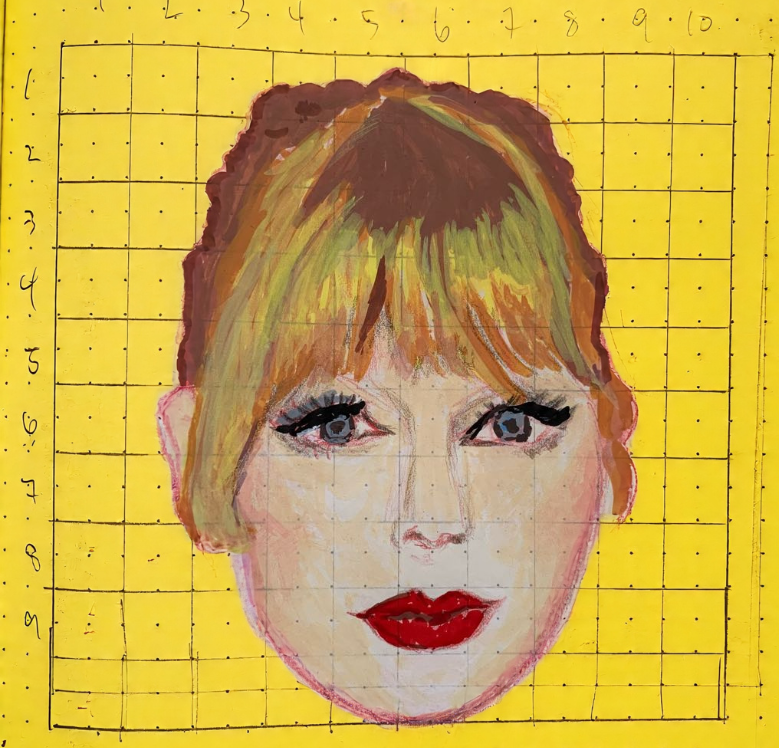
Give students a sheet of grid paper and explain that each square represents one pixel, just like the blocks in Minecraft.
Students design a portrait of themselves using the grid.
Encourage them to think about how they can represent their features with simple blocky shapes, such as:
- square hair
- rectangular glasses
- pixel-style eyes
- patterned shirts
Some students carefully plan their design first, while others dive right in and experiment as they go.
Either way, the portraits always turn out wonderfully unique.
A Helpful Classroom Tip
Before starting the math portion, have students outline sections of their portrait with a darker marker.
For example:
- hair
- shirt
- face
- background
This makes it much easier for students to see the boundaries of each shape when they begin exploring area and perimeter.
Step 2: Turn the Portrait Into a Math Investigation
Now the fun continues — but this time through a math lens.
Because the portraits are built on a grid, students can analyze their own artwork to explore area and perimeter.
Exploring Area
Explain that area is the amount of space inside a shape, measured in square units.
Since each square on the grid represents one square unit, students can simply count the squares inside a section of their portrait.
Ask students questions like:
- What is the area of your hair?
- What is the area of your shirt design?
- What is the area of your face?
Example:
If a student’s hair covers 18 squares, then the area is:
18 square units
Students often enjoy comparing their results with classmates.
Exploring Perimeter
Next, introduce perimeter, which is the distance around the outside of a shape.
Students trace around the edge of a section of their portrait and count the outside edges.
Example:
Hair outline = 22 unit edges
Perimeter of hair = 22 units
Because the portraits are made of square blocks, the edges follow the grid clearly, which helps students visualize the perimeter.
Questions to Spark Thinking
As students work, try asking questions like:
- Which part of your portrait has the largest area?
- Which shape has the longest perimeter?
- Does the shape with the biggest area always have the longest perimeter?
- Can two shapes have the same area but different perimeters?
These questions often lead to great classroom discussions.
Fun Math Challenges
Once students understand the basics, try adding a few challenges.
Shirt Design Challenge
Create a new shirt pattern with an area of exactly 20 squares.
Perimeter Puzzle
Design two shapes that both have an area of 16 squares, but different perimeters.
Hair Redesign
Can you redesign your hairstyle with the same area but a different shape?
Students quickly discover that shapes can have the same area but very different outlines.
Reflection
At the end of the lesson, ask students to reflect on what they discovered.
You might ask:
- How did the grid help you build your portrait?
- Did counting squares change how you looked at your artwork?
- Why do you think games like Minecraft use grids and blocks?
Students often realize that artists, game designers, and mathematicians all think about shapes and space in similar ways.
Why Art and Math Work So Well Together
Projects like this show students that math isn’t just something that lives on worksheets. It can be found inside the art they create and the worlds they build.
A simple Minecraft-inspired self portrait becomes a way to explore:
- creativity
- geometry
- spatial reasoning
- design thinking
And along the way, students see that math and art can work together in really interesting ways.
Minecraft Self Portrait Math Worksheet
Area & Perimeter Investigation