As an art teacher, one of my favorite activities to introduce to young children is the mesmerizing world of paper marbling with shaving foam and ink. This fun, tactile art form not only introduces children to beautiful designs but also connects to science concepts they can explore in the classroom—particularly when we tie it into the popular Kindergarten “Magic Milk” science experiment!
What is Paper Marbling with Shaving Foam and Ink?
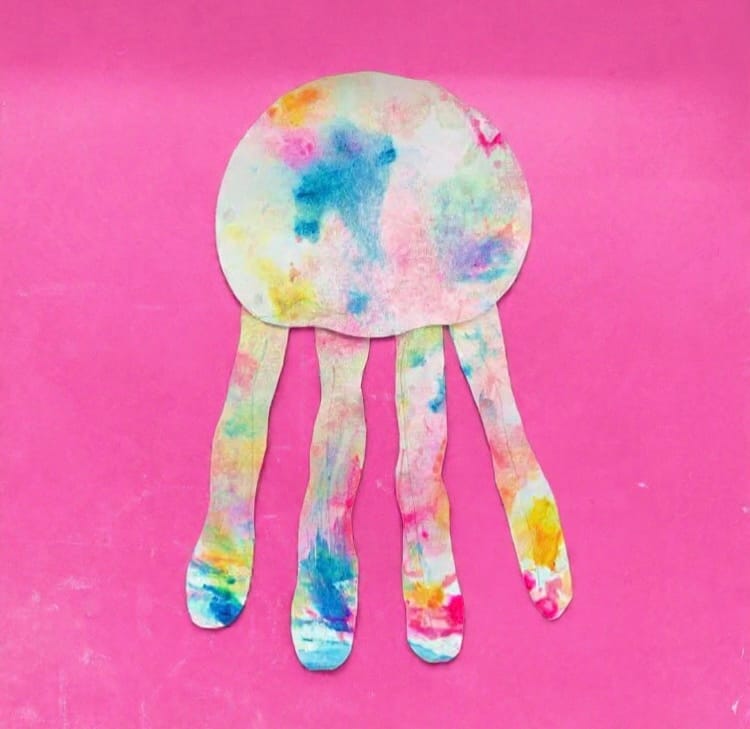
Paper marbling is an ancient technique where ink or paint is floated on a liquid surface, then transferred onto paper, creating unique and colorful patterns. In our version, we use shaving foam as the liquid base.
Here’s how it works:
1. Spread a layer of shaving foam on a tray.
2. Drop different colors of liquid ink or watercolor paint on top.
3. Swirl the colors around with a stick, toothpick, or even a fork.
4. Gently lay a piece of card paper on top, pressing down firmly.
5. Pull it off, and voilà—beautiful, swirling patterns are left behind!
6. Scrape off the excess shaving foam left on the card with a spatula
This process allows children to see how colors can mix and create new shades and patterns. The shaving foam provides a nice texture to work with, and the ink floats on top, making it easy for young children to manipulate the colors and see their effect.
Linking to the Kindergarten Magic Milk Experiment
Now, here’s the magical part! This paper marbling technique can be directly related to the *Magic Milk* science experiment. If you’ve ever done this fun experiment, you know how food coloring dances on the surface of milk when you add a drop of dish soap. The soap breaks the surface tension of the milk and causes the food coloring to swirl in a magical, colorful dance.
In our marbling activity, the ink on the shaving foam behaves similarly to how the food coloring moves in the milk. When kids drop ink on the foam, the colors spread and swirl in response to their manipulation, similar to how soap affects the food coloring in milk. It’s a perfect, hands-on way to show how liquids interact with each other, surface tension works, and how colors can mix and create patterns.
Benefits for Kindergarteners
Sensory Experience:
- The shaving foam adds a tactile element that is perfect for young learners. Children love the feel of it as they spread and swirl it around.
2. Fine Motor Skills:
As they use tools to swirl the ink, kids are strengthening their hand-eye coordination and fine motor control.
3. Color Exploration:
Just like in the Magic Milk experiment, children can observe how colors mix, separate, or form new hues when dropped onto the foam.
4. Creativity and Pattern Recognition:
This activity helps children develop their creative thinking as they explore the endless combinations of color and design. They also begin to recognize patterns and repetitions in the swirling designs.
Connecting Art and Science
By pairing the art of paper marbling with the science of the Magic Milk experiment, you create a learning experience that is both educational and enjoyable. Children learn about the properties of liquids, how colors interact, and develop their artistic skills—all while having fun in a magical way!
So, grab some shaving foam, your favorite inks, and paper, and let your little artists dive into a world of colorful swirls and scientific discovery. They won’t even realize how much they’re learning while they’re creating beautiful art!—Do you have any other creative experiments you’d like to try in the classroom? Feel free to share your thoughts!