Coffee Filter Flowers & Capillary Action
A hands-on lesson in how plants drink
There’s something magical about watching color travel.
In this lesson, students create vibrant coffee filter flowers while exploring one of the most important processes in plant biology: capillary action — the way water moves through tiny spaces without needing gravity to pull it along.

Step 1: Painting the Flower
Students begin with a simple white coffee filter. Using washable markers, they add rings, dots, and bold lines of color. The more pigment, the better.
Then comes the transformation.
With a dropper or light spray bottle, we add water to the center of the filter and wait.
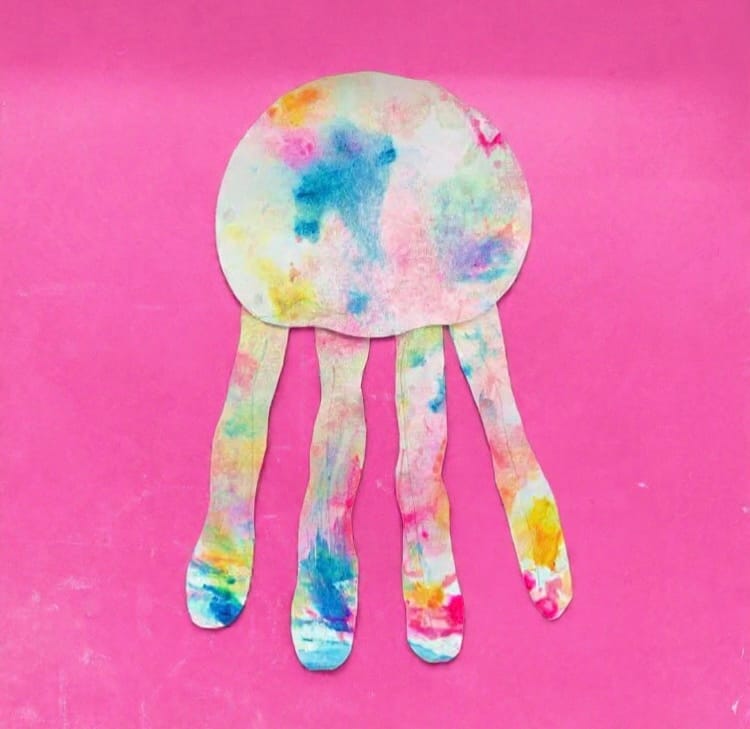
Almost immediately, the colors begin to spread, blend, and bloom outward. The water travels through the tiny fibers of the coffee filter, carrying pigment along with it.
And that movement — that quiet spreading — is capillary action in action.
What Is Capillary Action?
Capillary action is how water moves through narrow spaces — like the tiny tubes inside a plant’s stem.
In real plants, water travels upward from the roots through microscopic tubes called xylem. It moves against gravity, pulled upward by cohesion (water molecules sticking to each other) and adhesion (water sticking to the plant walls).
In our coffee filter flower, the paper fibers act like those tiny tubes. As water moves outward, it carries the marker ink with it — just like real plants carry water and nutrients from roots to leaves and petals.
Science hiding inside art. Always my favorite.
Adding the Stem, Leaves… and Roots
After the painted filter dries and is shaped into a bloom, students build the rest of the plant: stem, leaves, and roots.
This is where the lesson deepens.
Adding the roots transforms the project from a decorative flower into a whole organism.
We talk about:
- Roots anchoring the plant in soil
- Roots absorbing water and nutrients
- The journey water takes from roots → stem → leaves → flower
When students attach those simple brown paper roots, they are visually mapping the invisible system that keeps plants alive.
The stem becomes more than a strip of green paper.
It becomes a pathway.
The flower becomes more than color.
It becomes the final destination of water that began underground.
Layers Of Learning
- It combines art, observation, and science.
- It makes an invisible process visible.
- It turns abstraction (capillary action) into something tangible and beautiful.
- It reinforces plant structure by labeling flower, stem, leaf, and roots.
And perhaps most importantly — it invites wonder.
Because watching color travel feels a little bit like watching life happen.
Yes. This is where your blog really becomes teacher-gold.
Here are reflection questions you can add at the end of the post. You can frame them as discussion prompts, journal responses, or exit tickets.
Reflection Questions for Students
🌈 About the Art Process
- What happened to your colors when you added water?
- Did the colors move the way you expected? Why or why not?
- What surprised you most during this experiment?
- If you did this again, what would you change?
🌱 About Plant Structure
- Why do plants need roots?
- What would happen if a plant did not have roots?
- What is the job of the stem?
- Why do you think the flower is at the top of the plant?
💧 About Capillary Action
- How is the coffee filter like a plant stem?
- How did the water move through the filter?
- Why does water need to travel upward inside a plant?
- What do you think would happen if the stem was broken?
🧠 Connecting Art and Science
- How did making art help you understand how plants grow?
- What part of this lesson felt like science? What part felt like art?
- Why do you think artists and scientists both observe closely?
✍️ Extension / Deeper Thinking
- Imagine you are a drop of water starting at the roots. Describe your journey to the flower.
- How might plants survive in very dry places?
- Where else in nature do you think capillary action happens?