Celebrating Global Mindedness Through Play and Creativity: Irasshaimase (いらっしゃいませ):
Working in an international school means we are surrounded every day by a beautifully diverse community. Our students come from all around the world, and we have the privilege of learning about one another’s cultures, traditions, and stories. One of my favourite parts of teaching in this environment is finding ways to celebrate children’s heritage through books, art, crafts — and, of course, food!

In one of my classes, I had a student who was half Japanese and half English. She often had lots of questions about Japan and spoke with such pride about that part of her heritage. When she shared that she would be visiting Japan during the school holidays, her excitement was contagious!

As a Japan lover myself, I was eager to join her on this learning journey. Together, we borrowed books from our school library about Japan — stories and nonfiction titles that introduced us to the country’s rich culture and traditions. Naturally, sushi made a few appearances! That sparked an idea: what if we created our own felt sushi for pretend play?

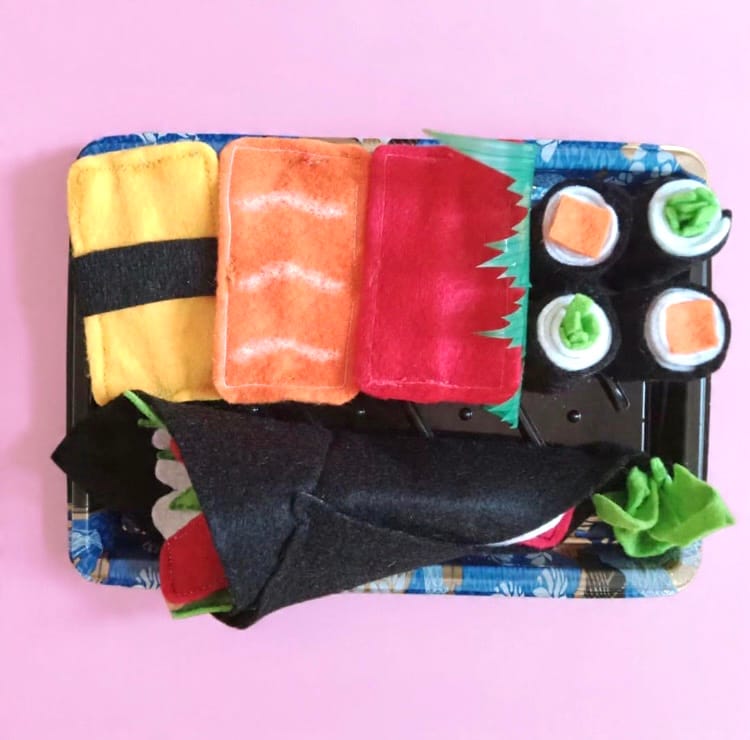
Soon, the classroom was buzzing with excitement. I made pieces of felt sushi, complete with little rolls, nigiri, pretend wasabi, and even a felt soy sauce dish. The children loved trying to pick up the pretend sushi with chopsticks — it was a fantastic fine-motor challenge as well as a cultural exploration. I also added a whole fish (a common Japanese dish), some noodles, and fish cakes to extend the play.

At first, I worried that this experience might feel too focused on one child’s background, but I didn’t need to worry at all. The entire class was engaged and curious, asking questions, role-playing, and sharing their own food experiences from home. It became a joyful, shared celebration of culture, creativity, and connection.
How to make felt sushi:
Nigiri: Take white felt, draw a rectangle the size of the nigiri you would like to make. Draw four smaller rectangles on each side, cut out, and fold the sides up to create a “box” with no lid. Sew or glue the seams. Cut a piece of orange or red (salmon or tuna) felt that is slightly larger than the original rectangle and glue or sew on top of the rice. Draw white lines on the “salmon” using paint markers.
Roll: Cut out a long rectangle with black felt. Cut a longer white strip (same size just longer) and roll that several times. Wrap the black felt around the rolled white felt. Add embellishments on top with different colored felts depending on the type of sushi you’re making.
Handroll: Cut out a square piece of black felt, add colored felt in different shapes and roll it up! Glue or sew it together.
Wasabi: I scrunched up a piece of scrap green felt (off cuts from making nigiri and rolls) until it looked “right” and sewed it into place.
Putting it all together: To make the experience more realistic, I reused a sushi take-out box and washed and reused the green “grass” these boxes always come with. Sustainability and learning rolled into one!
Inspired by this success, I later created a Singapore-themed felt food set — with chicken rice, satay, and other local favourites — in the lead-up to Singapore’s National Day. Once again, the children dove into play and conversation, making meaningful links between cultures and cuisines.
These moments remind me how powerful play can be in building global mindedness. When children explore the world through stories, art, and imaginative play, they not only learn about others — they learn to appreciate and celebrate difference. And who knows? I might just have to start stitching some new felt food very soon!